
Join The MFCH Community
Travel Journal
©Villa Santo Sospir
There are museums we visit for the paintings on the walls, and then there are places where the house, the garden and even the view from a window become part of the story.
Travelling around France, we are lucky to visit many beautiful homes and gardens, but an artist’s home is different. You start noticing the things they must have looked at every day: the olive trees outside Renoir’s window in Cagnes-sur-Mer, the changing colours of Monet’s garden at Giverny, or the outline of Sainte-Victoire that Cézanne returned to again and again.
Some created gardens that became subjects in their own right. Others painted the landscape immediately beyond their front door. Jean Cocteau went one step further and drew directly onto the walls of the villa where he was staying.
These are six places we think are worth visiting not simply because of who lived there, but because they allow us to understand a little better what they saw.
©Lucy Hunter
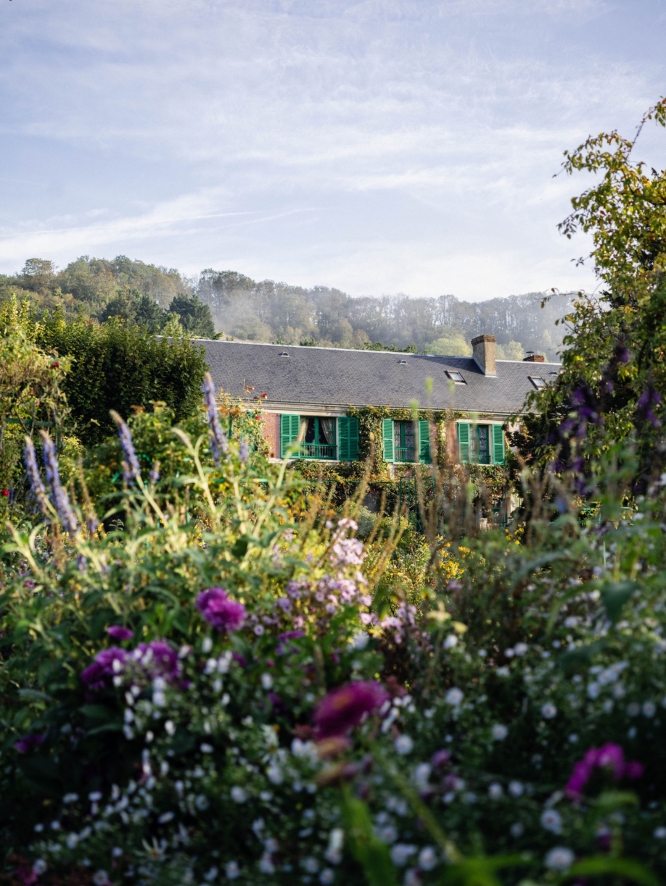
Claude Monet’s House & Gardens, Giverny
Giverny is the most famous name on our list, but it is one of those places that still deserves to be seen for yourself.
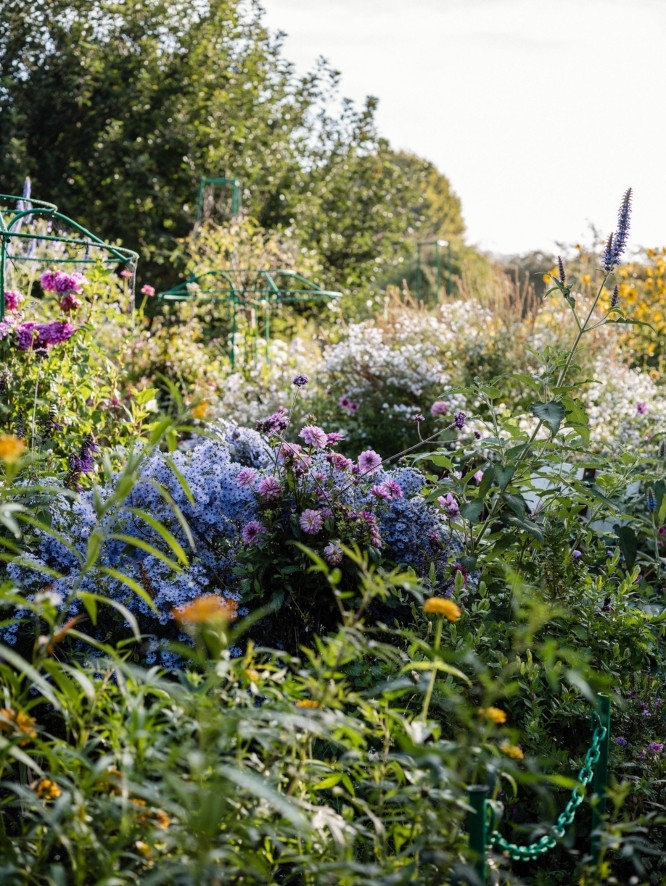
Claude Monet arrived here in 1883 and spent more than 40 years transforming the property. Gardening became a serious passion. He read nursery catalogues, attended horticultural exhibitions and exchanged ideas with fellow gardeners including Gustave Caillebotte. First came the flower-filled Clos Normand in front of the house; later, he acquired additional land and began creating the Water Garden, with its pond, Japanese bridge and water lilies.
What makes Giverny so interesting is that Monet was not simply painting the landscape he happened to find around him. He was creating it.
The garden was composed with a painter’s eye for colour, movement and changing light and eventually became one of the great subjects of his work. Walking around it today, there is an unusual feeling of moving between the real garden and paintings that have become so familiar.
Don’t hurry through the house either. We particularly love the yellow dining room and blue-tiled kitchen, as well as Monet’s collection of more than 200 Japanese prints, including works by Hokusai and Hiroshige.
Our tip: Giverny receives a lot of visitors. Go as early as you can, then allow some time for the village rather than treating the house as a quick stop from Paris.

©Musée de Cagnes-Sur-Mer
Renoir at Les Collettes, Cagnes-sur-Mer
This one is particularly close to our hearts because of its setting on the French Riviera.
Renoir bought Les Collettes in Cagnes-sur-Mer in 1907 with his wife, Aline Charigot. The property already had its old olive grove and farmhouse; in 1908, the family commissioned architect Jules Febvre to build the neo-Provençal house that stands here today.
The garden is what we remember most.
Centuries-old olive trees surround the house, alongside orange and fig trees, with views extending towards the Cap d’Antibes. This wasn’t simply an ornamental garden either. Aline managed Les Collettes very much as a working property, with citrus trees, vines, roses and a kitchen garden, while the family produced its own olive oil.
Renoir continued to paint here until the end of his life. The Mediterranean light, olive trees, flowers and people around him entered his work, and today the house still contains his furniture, familiar objects and studio alongside original paintings and sculptures.
It is much quieter than Giverny, and perhaps that is part of its appeal. You can spend time beneath the olive trees and understand immediately why Renoir wanted to remain here.


©Cezanne en Provence
Paul Cézanne’s Aix-en-Provence
For Cézanne, we couldn’t choose just one house.
His relationship with Aix-en-Provence was too important, and following him through the city and surrounding countryside is one of our favourite ways to understand his work.
Begin at the Bastide du Jas de Bouffan, the family property bought by Cézanne’s father in 1859. Cézanne was just 20. He painted directly onto the walls of the house, worked outdoors in its grounds and painted the chestnut avenue, pond and surrounding landscape repeatedly. It was also from the end of this garden that he painted his first Sainte-Victoire in 1870.
Later came the Atelier des Lauves, built after Cézanne bought land on the hill above Aix in 1901. He worked there daily during the final four years of his life. Familiar objects remain in the studio, and the building itself reveals something about how seriously he considered his working conditions: he even had a narrow opening made in the north wall through which large canvases could pass so he could examine them outside in natural light.
From there, walk another fifteen minutes to the Terrain des Peintres, where Sainte-Victoire appears in front of you. Cézanne repeatedly came to paint in this area towards the end of his life.
Seeing that mountain after seeing the paintings is a lovely reminder that sometimes the landscape itself is the museum.
©Villa Santo Sospir
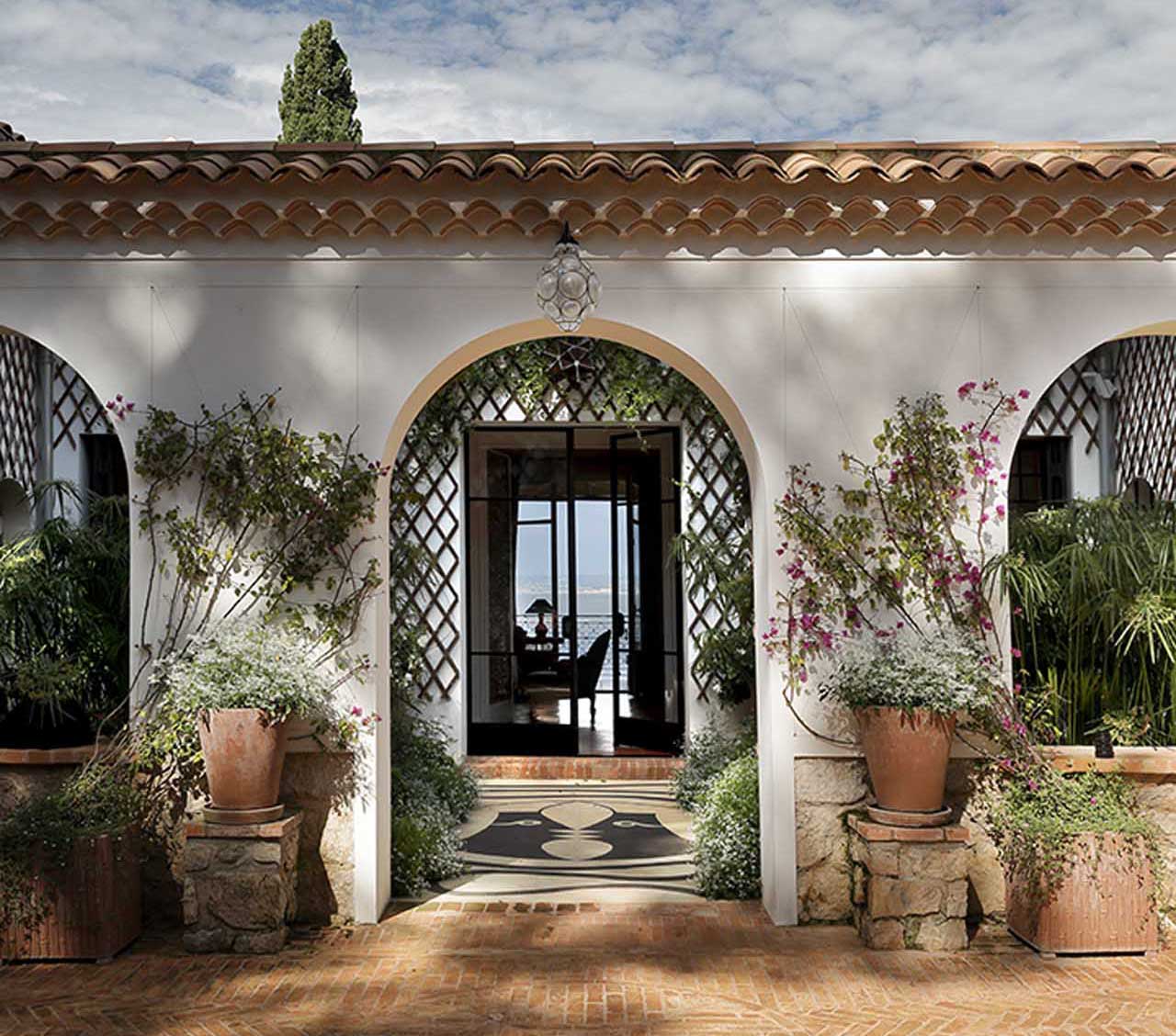
Villa Santo Sospir, Saint-Jean-Cap-Ferrat
Santo Sospir is quite unlike anything else on this list.
In 1950, Francine Weisweiller invited her friend Jean Cocteau to spend a few days at her villa on Saint-Jean-Cap-Ferrat. He stayed for months, returned regularly afterwards and began covering the villa’s previously white walls with drawings. Cocteau described what he was doing as “tattooing” the house.
The result is somewhere between a private home and a complete work of art.
Mythological figures and drawings travel across the walls, doors and rooms rather than sitting neatly inside frames. And outside is Cap-Ferrat, whose villas, Mediterranean vegetation and extraordinary concentration of artists made it one of the great creative meeting places of the Riviera during the 20th century. Cocteau was far from the only artist drawn here, Matisse, Picasso and Chagall all spent time on the peninsula.
Santo Sospir has the added appeal of still feeling remarkably private. Visits are limited, which is exactly how we think a house like this should be experienced.
MFCH note: We were lucky enough to visit Santo Sospir privately with one of our Riviera groups, and it is precisely the sort of place we love introducing our guests to, somewhere with a wonderful story that you could very easily pass without knowing what lies behind the gate.
©Musée Victor Hugo
Victor Hugo’s Hôtel Particulier, Paris
At 6 Place des Vosges, behind one of Paris’s most recognisable façades, is the apartment where Victor Hugo lived with his family from 1832 until 1848.
These were enormously important years. He was already a celebrated writer when he arrived and lived here while writing works including Ruy Blas and part of Les Misérables. But the house also introduces visitors to another side of Hugo that is sometimes overlooked: Hugo the artist and decorator.
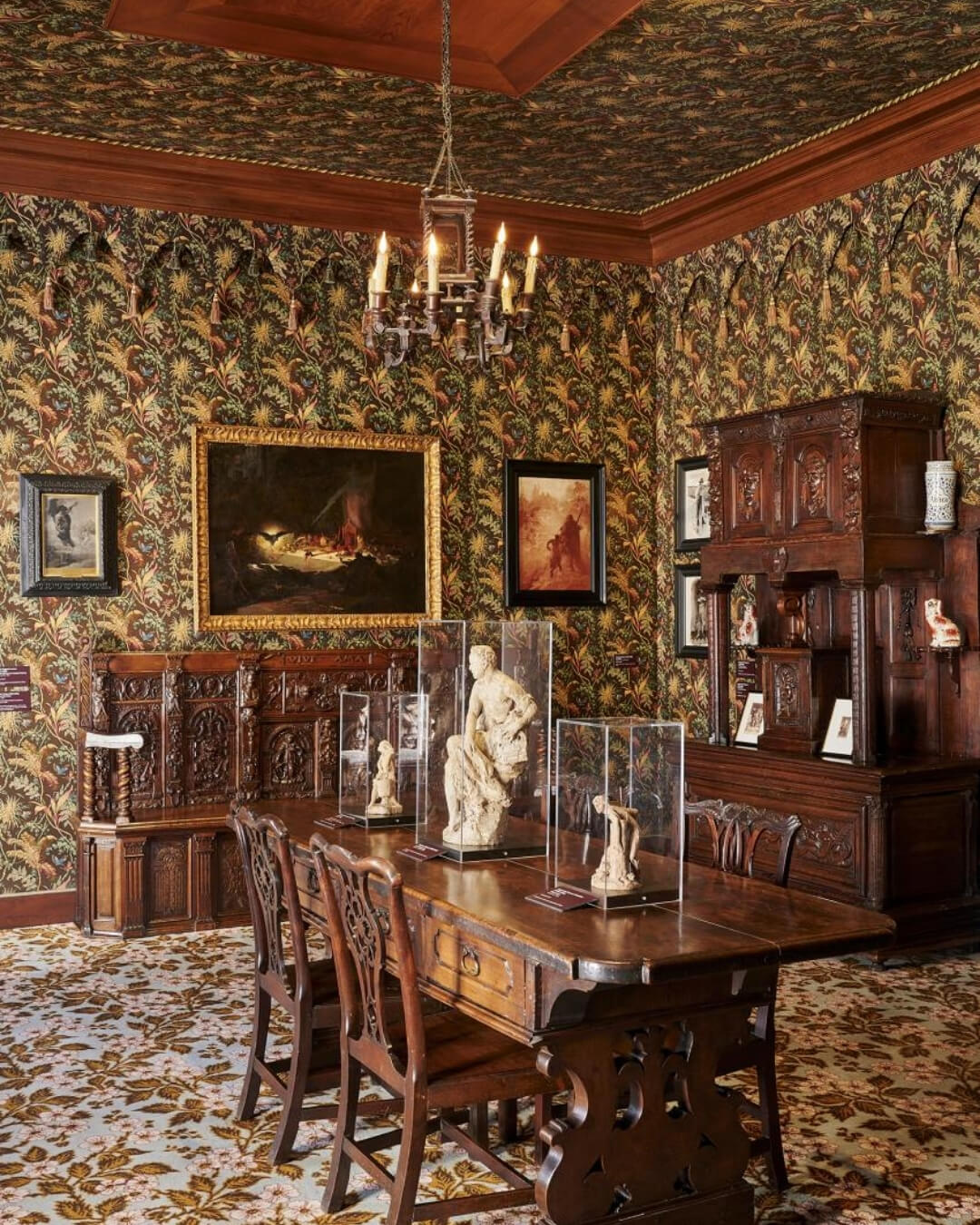
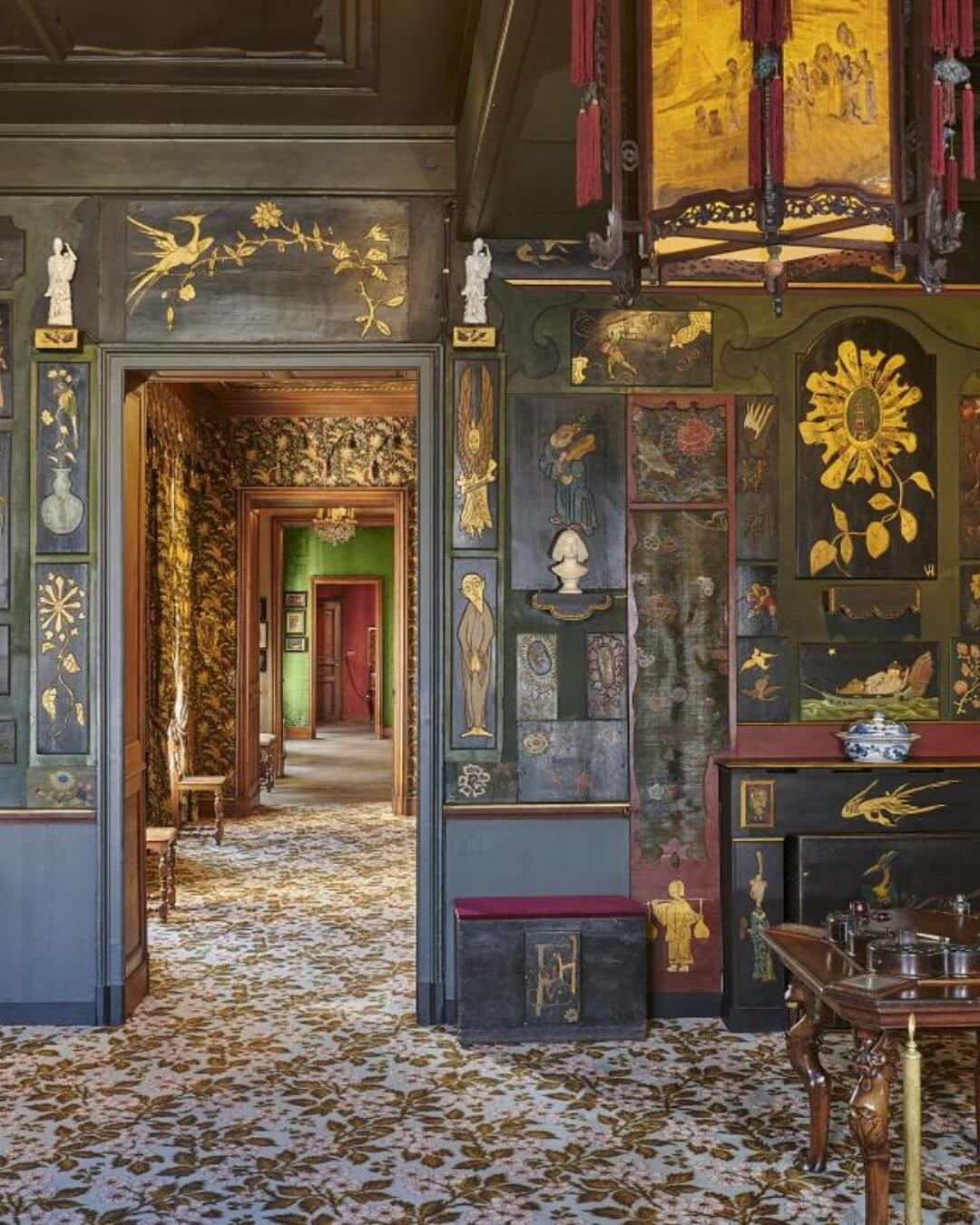
He was an extraordinarily prolific draughtsman, leaving thousands of drawings, and the museum is the only one to preserve decorative interiors conceived by Hugo himself.
That makes the visit feel much more personal than simply seeing manuscripts behind glass. Furniture, artworks and richly decorated rooms reveal the visual imagination behind the writer.
There is also a relatively new addition downstairs. The courtyard of the Hôtel de Rohan-Guéménée was transformed into a small planted garden during the museum’s renovation, taking inspiration from the fictional garden of rue Plumet described in Les Misérables.
It is an easy place to miss while walking around the Marais and a very good reason to linger on Place des Vosges rather than simply crossing it.
©Gustave Caillebotte’s House & Garden
Gustave Caillebotte’s House & Garden, Yerres
Just outside Paris, Yerres offers one of our favourite examples of an artist’s paintings and surroundings coming back together.
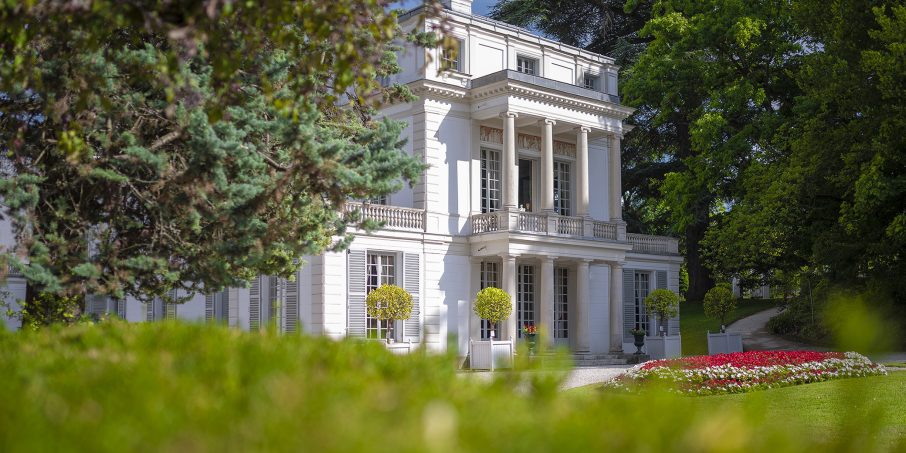
The Caillebotte family acquired the property in 1860 and used it as their country residence until 1879. Young Gustave spent his summers here, and during the 1870s he painted around 90 works in and around the estate.
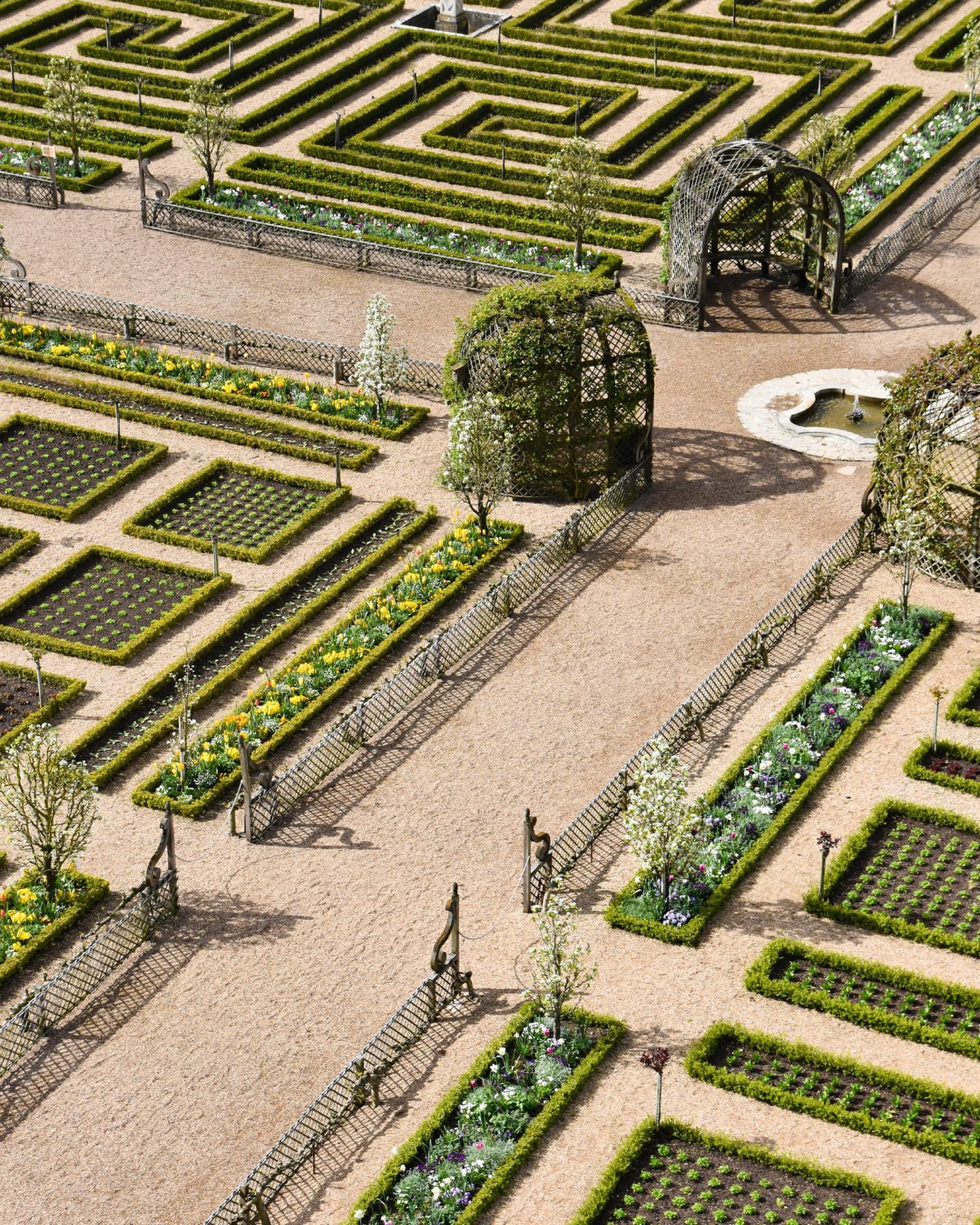
The 11-hectare grounds are wonderfully varied: an English-style landscaped park, the river Yerres, ornamental garden buildings, an orangerie and a kitchen garden. Caillebotte painted the river and boating scenes, paths, gardens and everyday life unfolding around the family property.
We particularly love the potager. Caillebotte was a passionate gardener as well as a painter, and the kitchen garden appears repeatedly in his work. The restored potager is still cultivated today by local volunteers.
The house itself has also been restored and furnished to evoke the family’s life here in the 19th century.
And unlike some major Impressionist sites, Yerres can still feel surprisingly peaceful. It is only around 20 kilometres from Paris, making it a very easy excursion when you want to leave the city for an afternoon.
MFCH Travel Experiences
A curated collection of small group tours across France, blending culture, gardens, antiques, history, and art de vivre.
Every Tuesday
Get the latest updates on French travel, culture, and more delivered right to your inbox.
Continue Reading

Join The MFCH Community