If you’re planning a trip to Champagne and wondering which cellars are truly worth visiting, these are the ones we love, for the stories as much as the champagne.
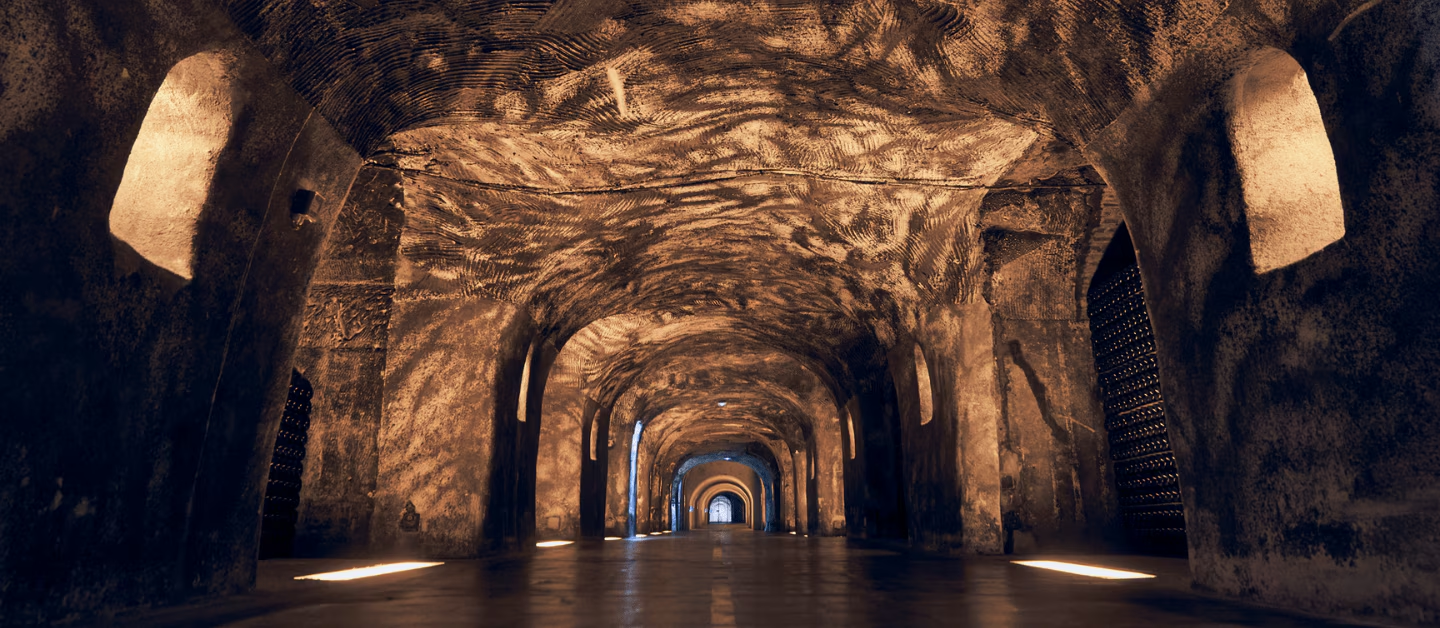
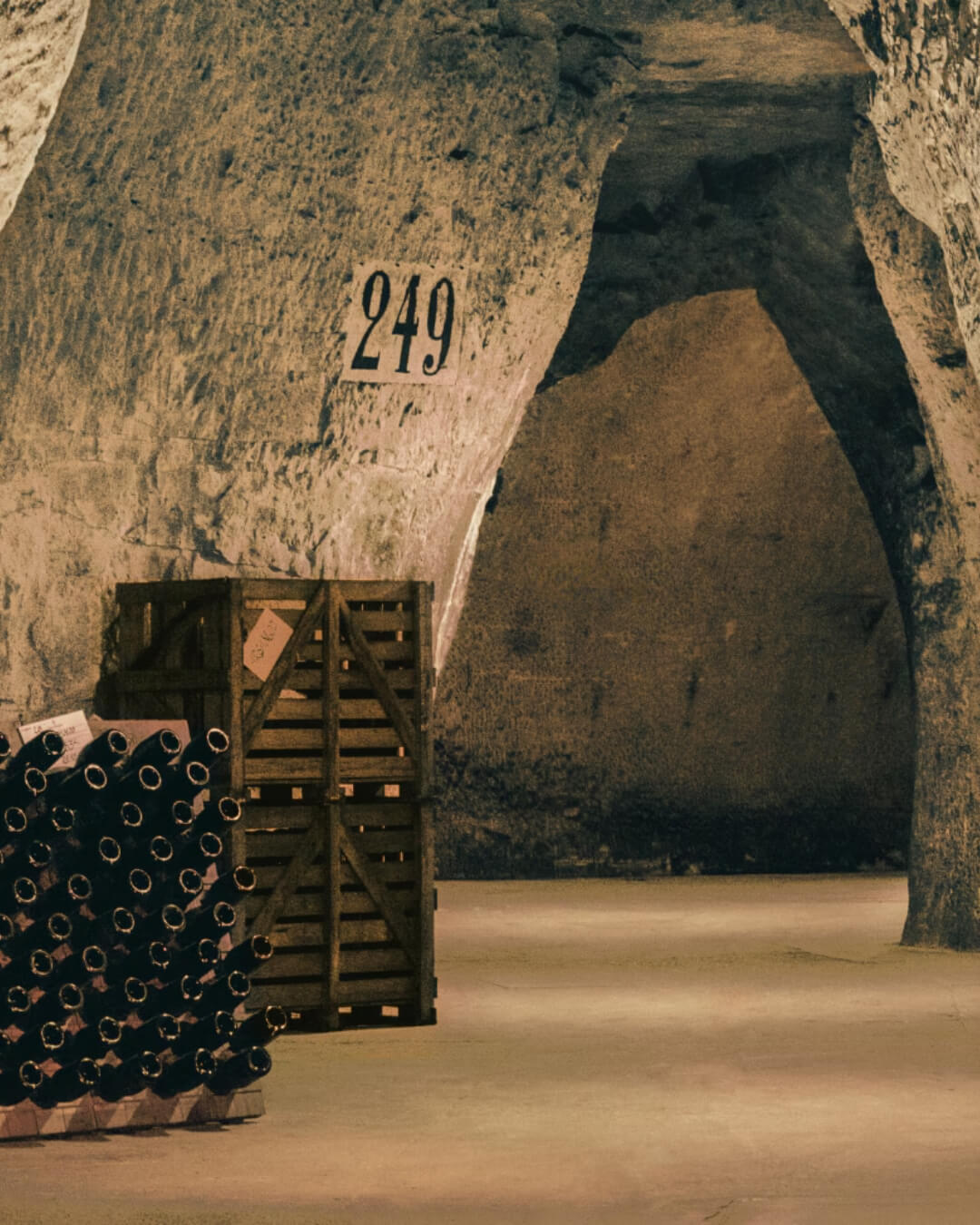
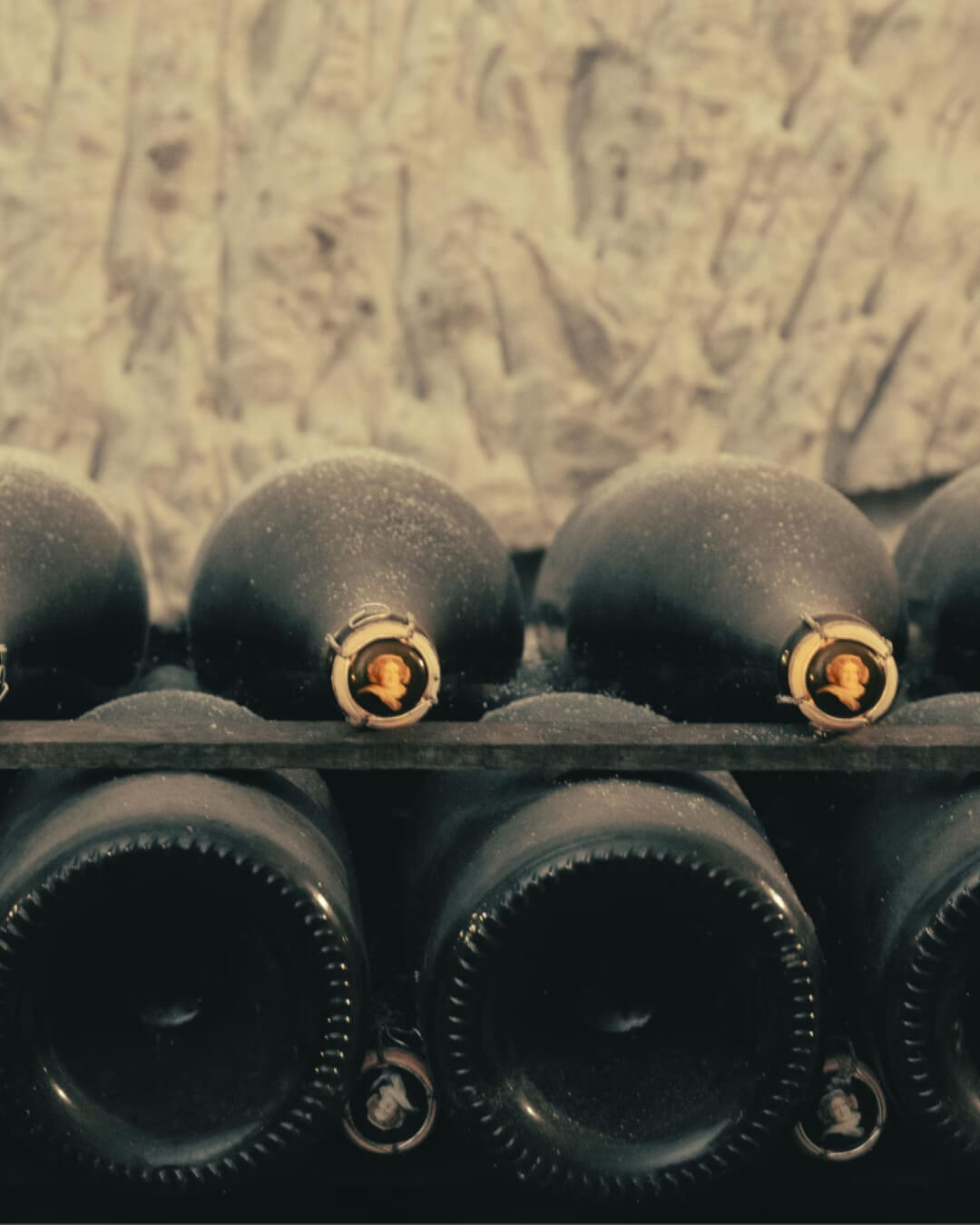
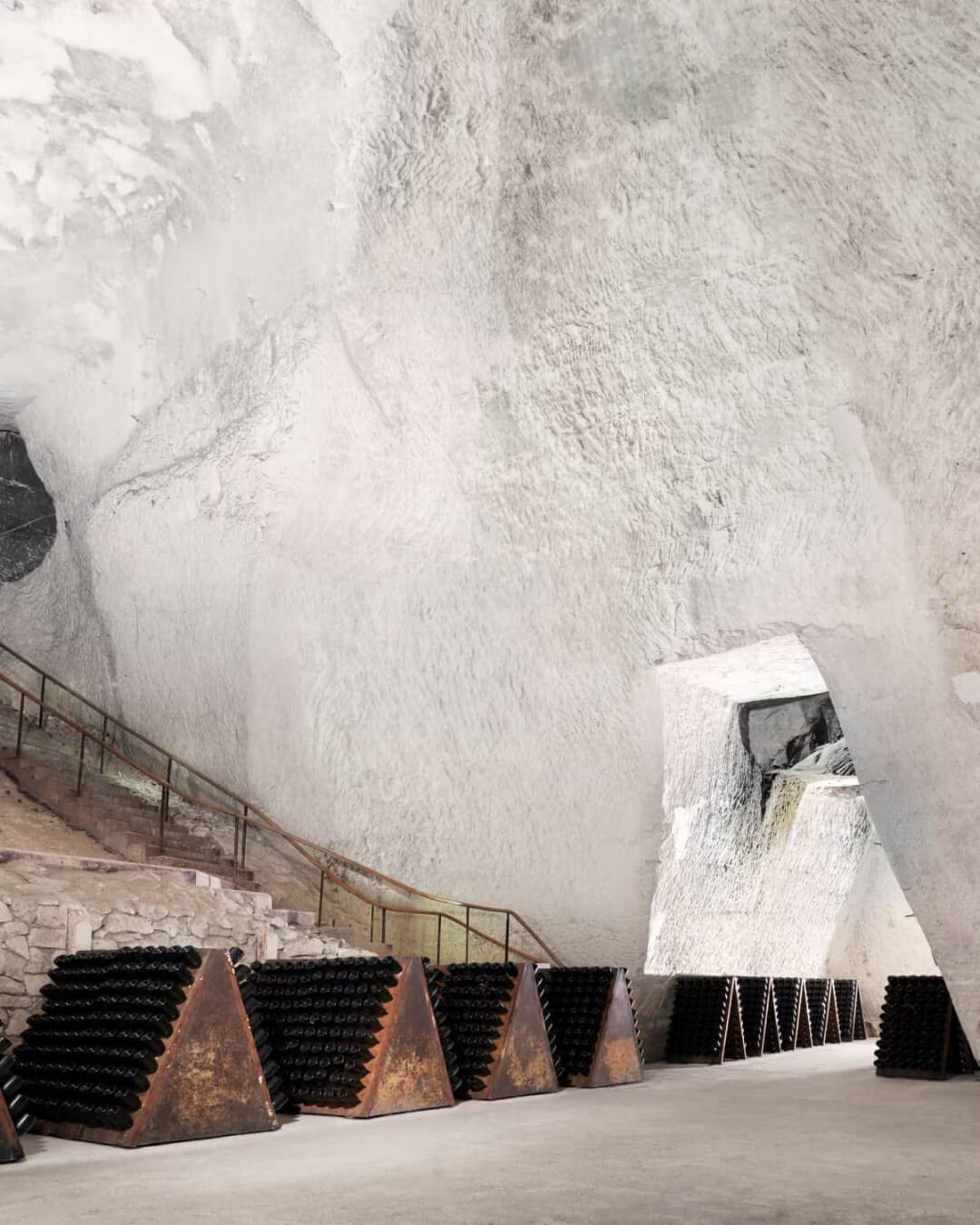
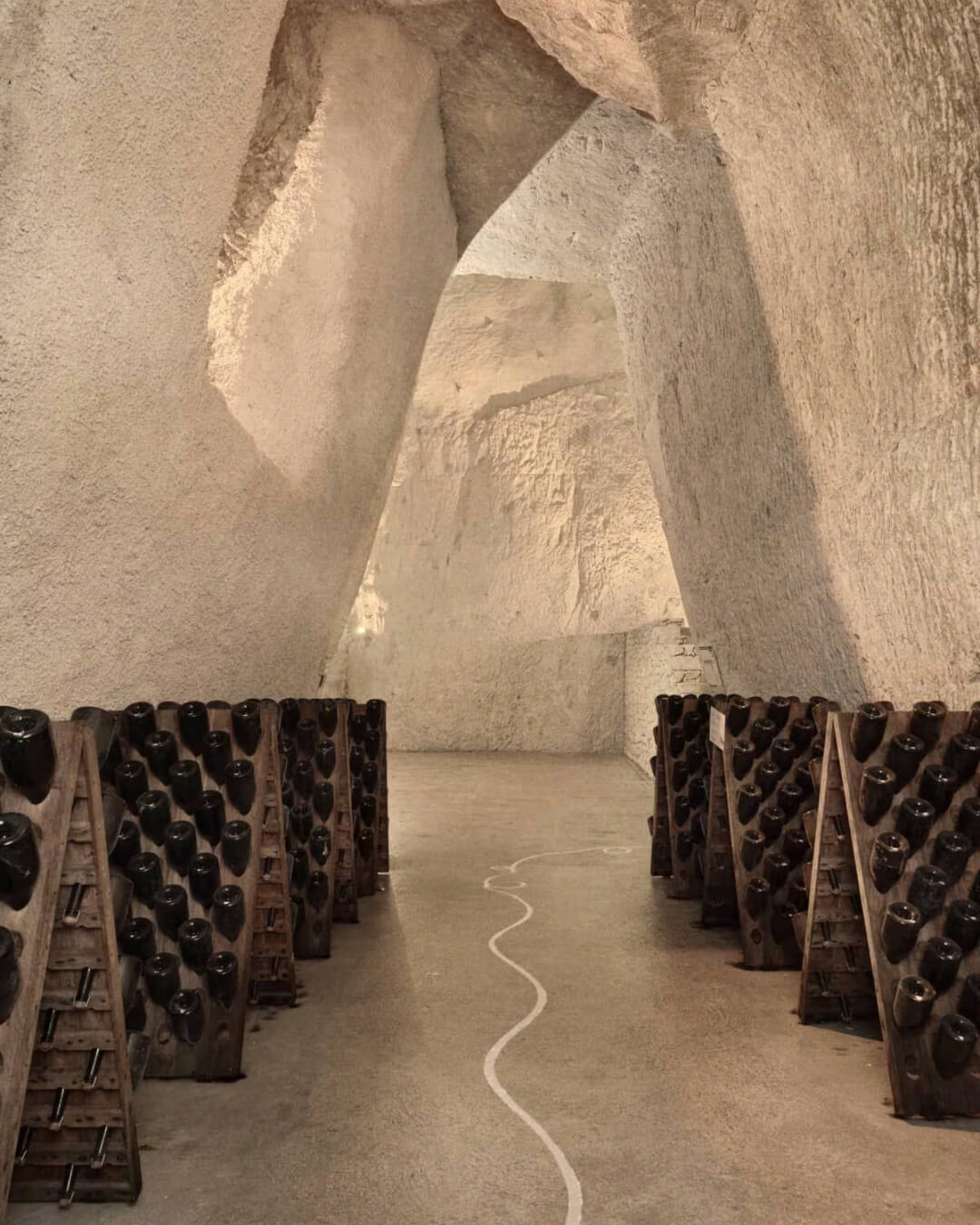
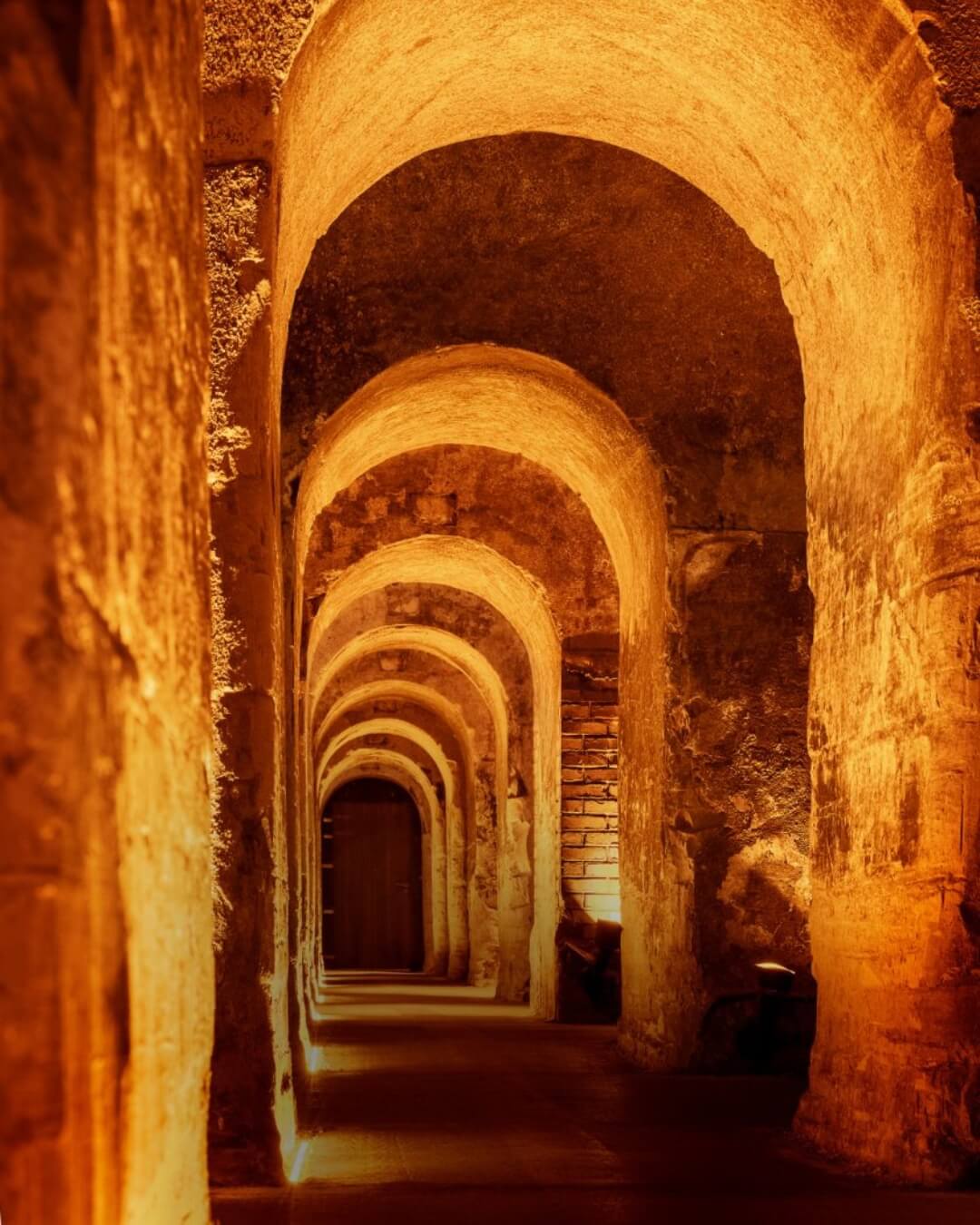
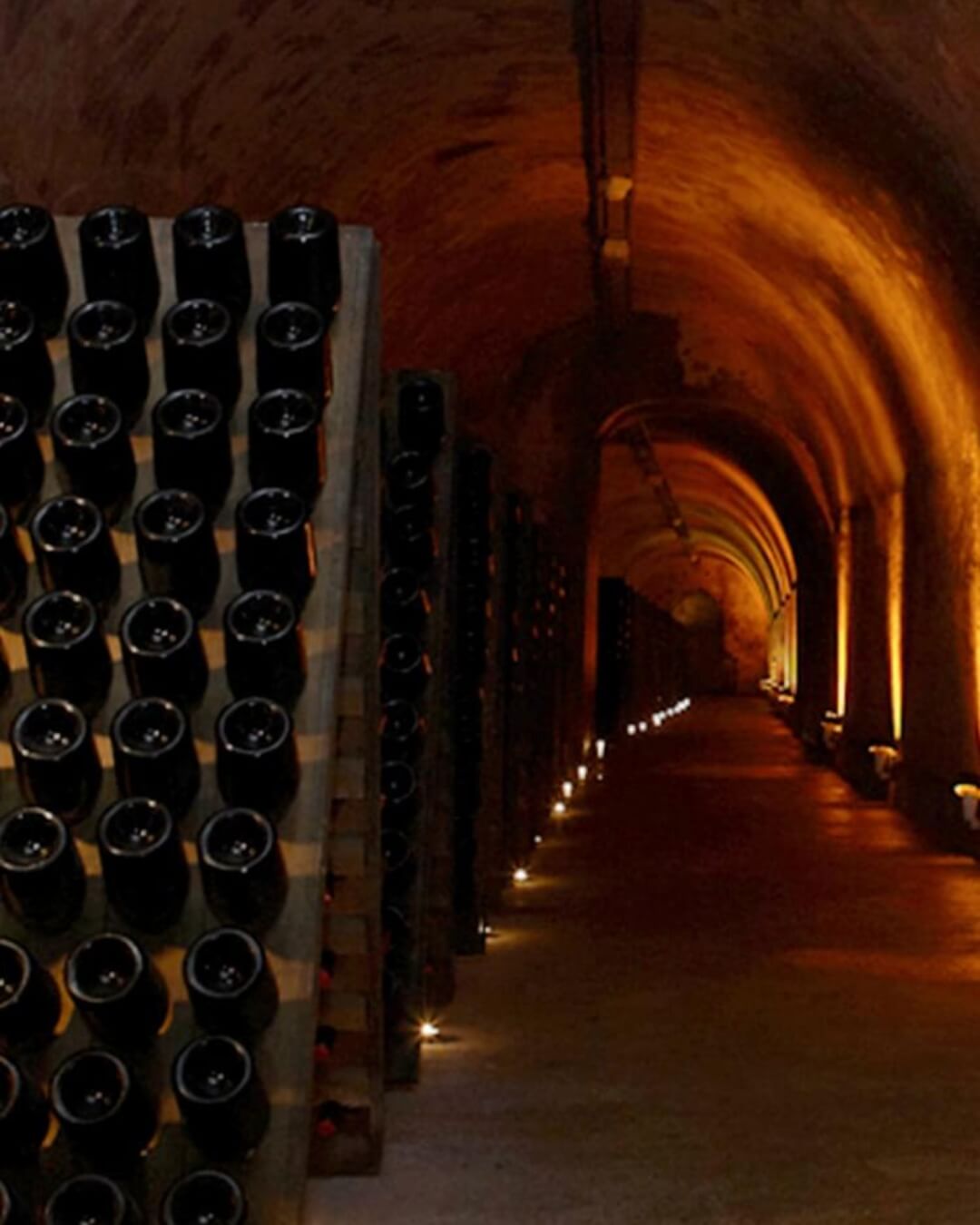
One of the things that always surprises people about Champagne is just how much of it exists underground. Kilometres and kilometres of chalk cellars, carved deep beneath Reims and Épernay, where millions of bottles rest quietly, away from light and heat, waiting patiently.
Visiting champagne cellars isn’t just about tasting (although that’s obviously a pleasure). It’s about history, craftsmanship, and understanding how this region, and its houses, have shaped something so iconic. The tricky part? Deciding where to go. Champagne is full of big names, family producers, and legendary houses, and not all cellar visits feel the same.
These are some of our favourites, the ones that feel memorable, immersive, and genuinely special.
If there’s one cellar visit that feels truly monumental, it’s Moët & Chandon. Beneath the Avenue de Champagne in Épernay lies an astonishing 28 kilometres of cellars, carved into the region’s white chalk. It feels like entering a small underground city.
No matter which visit you choose, Grand Vintage, À la Volée, or Instant Impérial; there’s a strong sense of history here. You’re welcomed beneath the statue of Dom Pérignon, and from there, the experience unfolds with impressive scale and polish. We’re especially fond of the tasting salons and the boutique at the end, which feel thoughtfully done rather than rushed.
Veuve Clicquot’s story is one of the most fascinating in Champagne. In 1810, Barbe-Nicole Ponsardin, known to us as the Widow Clicquot, created her first vintage and went on to invent the riddling table, revolutionising champagne production.
The cellars here stretch across nearly 24 kilometres, making them the largest in Reims. Acquired in 1909, they still carry traces of the people who passed through them over centuries, quarry workers, cellar masters, even soldiers.
The visit is modern and well designed, with immersive elements that tell the story clearly without overwhelming it. It ends, as it should, with a tasting of the house’s emblematic cuvées, and a renewed appreciation for one of Champagne’s most formidable women.
Ruinart feels almost sacred. Founded in 1729, it’s the oldest champagne house, and its chalk cellars were classified as a historic site as early as 1931.
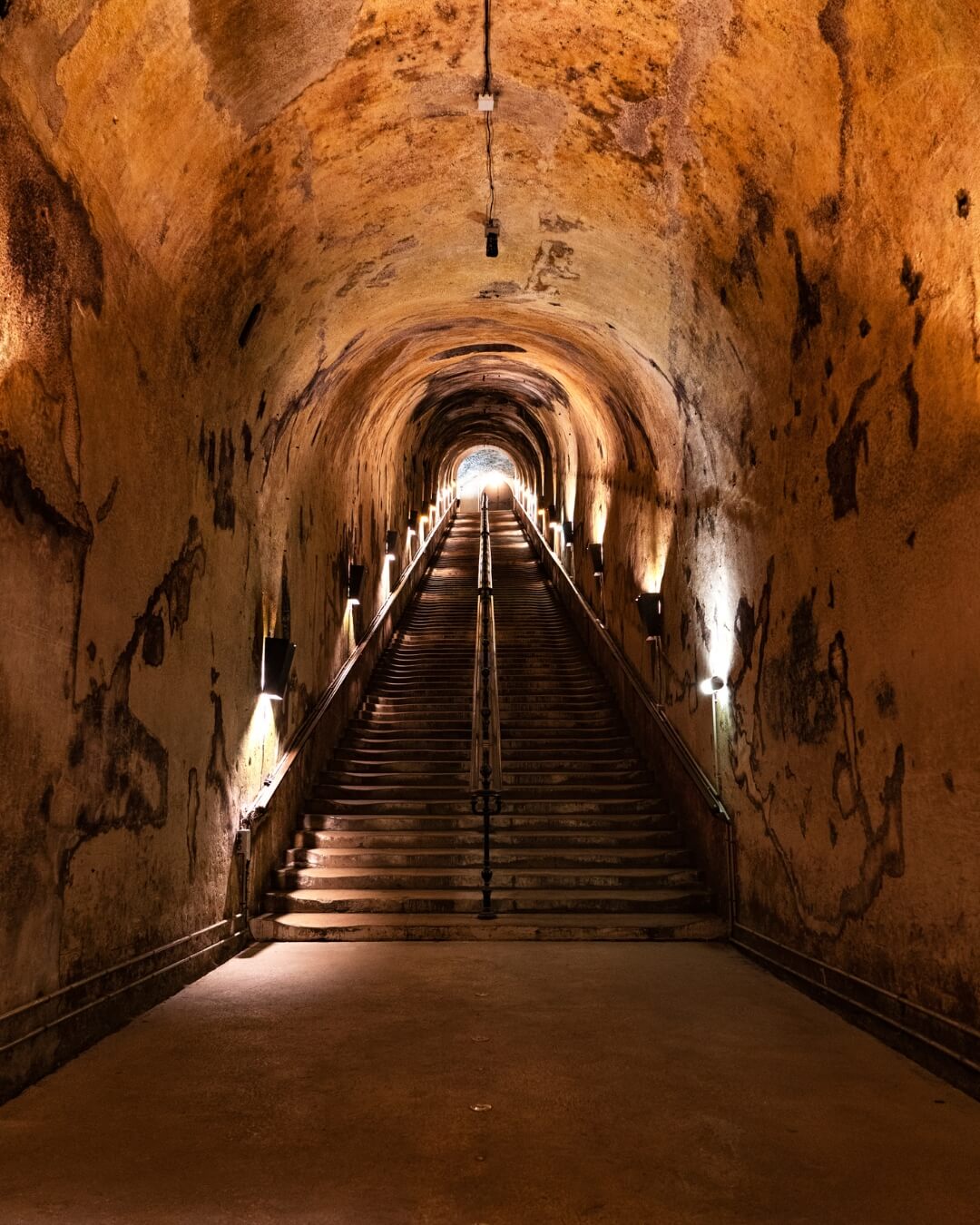
Descending 38 metres underground, you enter vast chalk “cathedrals” where bottles are stored at a constant 11°C. The scale is breathtaking, but what often moves people most are the small details: tiny sculptures carved into the chalk by generations of workers, quietly left behind.
One of the highlights is the œnothèque, where the house’s rarest bottles are kept, not accessible, but visible through a virtual experience. It’s a visit that feels contemplative, almost timeless, and well worth the two hours it requires.
Pommery’s cellars exist thanks to one woman’s vision. In 1868, Madame Pommery launched what was known as “the project of the century,” transforming abandoned Roman chalk quarries into a vast, interconnected cellar network spanning 18 kilometres.
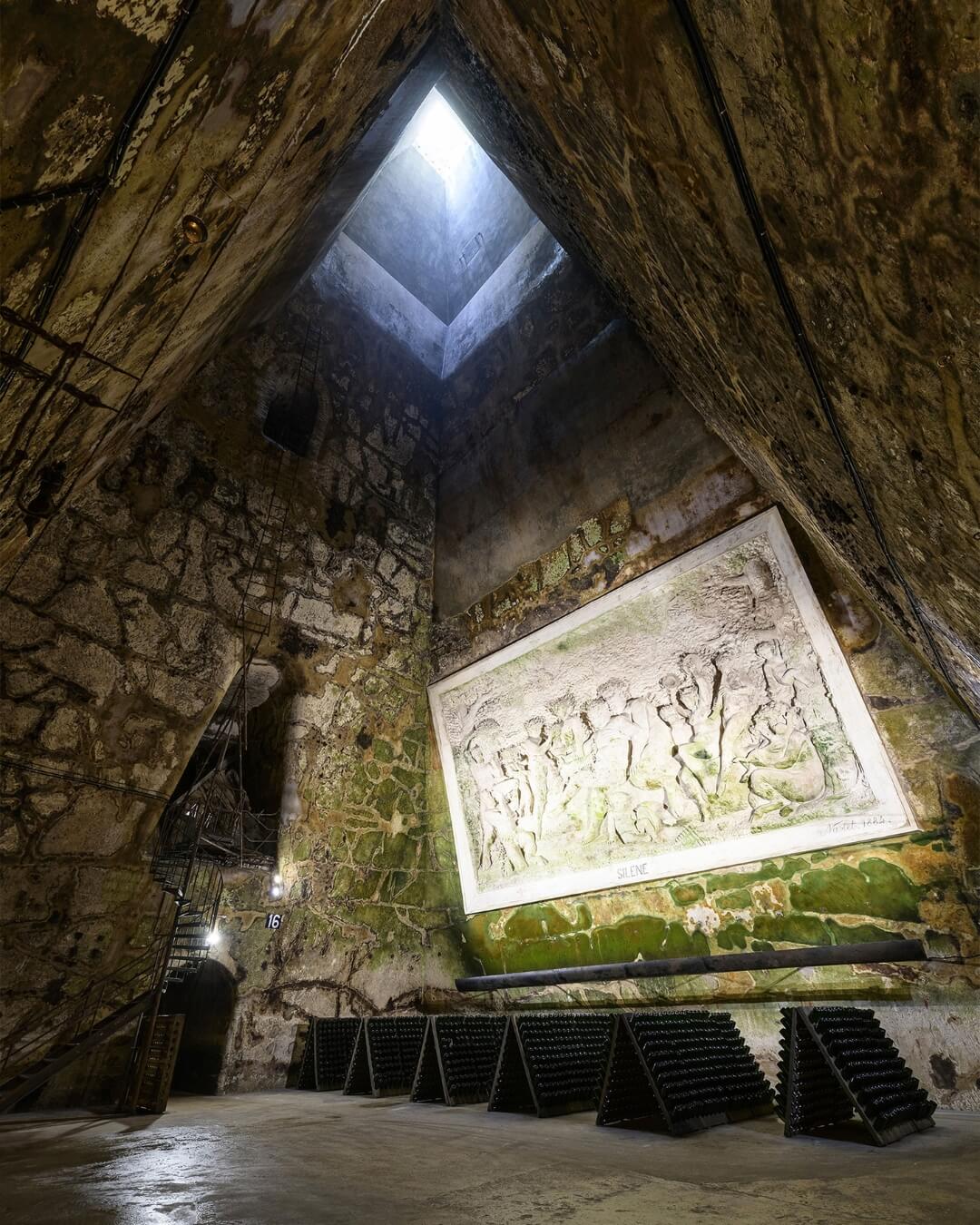
What sets Pommery apart is its deep connection to art. Sculpted bas-reliefs line the galleries, and since 2002, contemporary art installations have been placed throughout the cellars as part of the Expériences Pommery. Walking through feels like moving between centuries; ancient chalk, 19th-century ambition, and modern creativity all at once.
Taittinger is one of those visits that stays with you. Located on Place Saint-Nicaise in Reims, the house sits above extraordinary Gallo-Roman chalk cellars, now classified as a UNESCO World Heritage site.
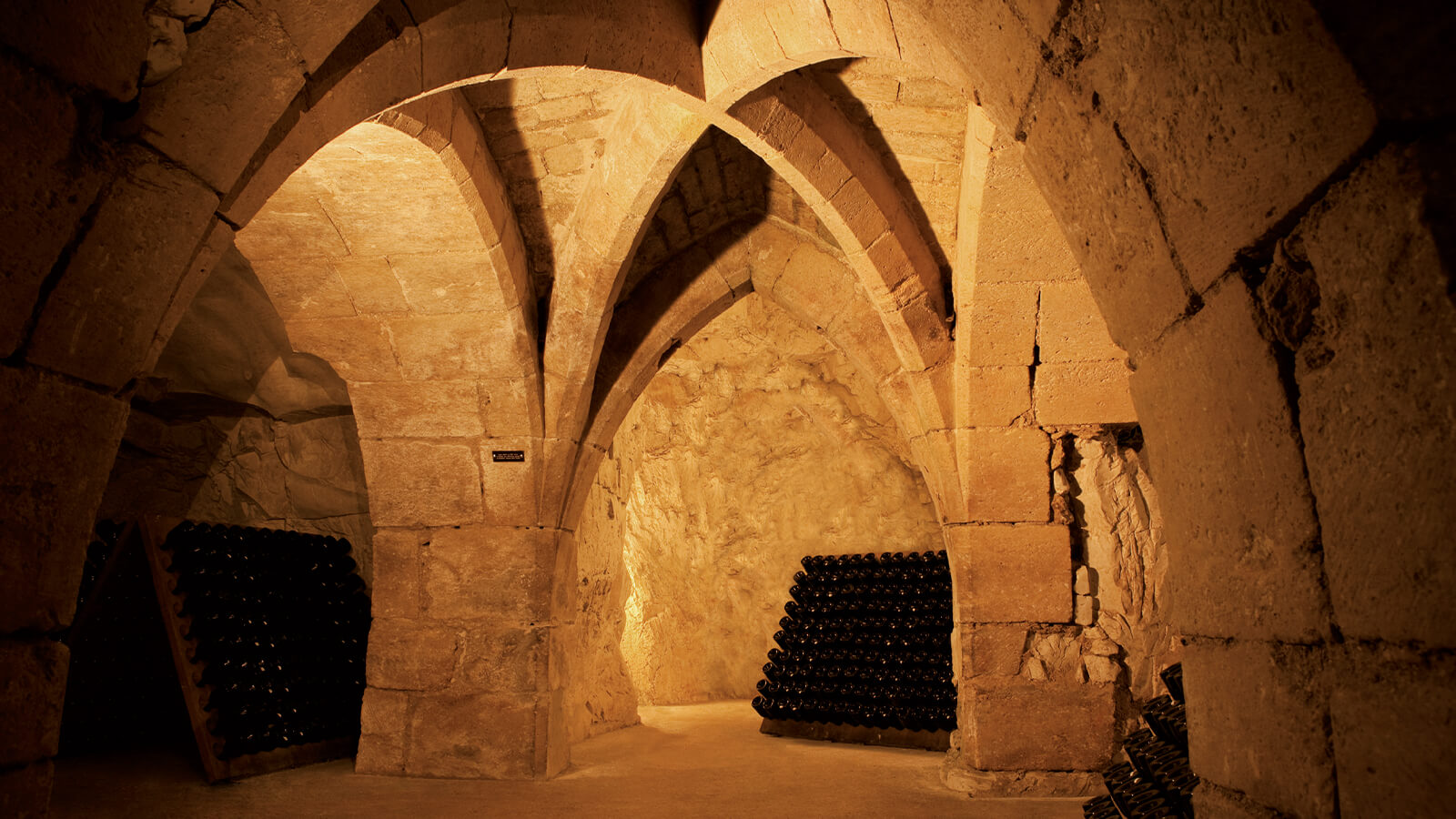
What makes Taittinger particularly special is the depth of history layered into the visit. At 18 metres underground, you walk through vast, pale crayères once used by Benedictine monks to store wines in the Middle Ages. Even after the Abbey of Saint-Nicaise was destroyed during the Revolution, the underground spaces remained, and today, nearly 15 million bottles rest there.
The visit has recently been redesigned, with a more immersive storytelling approach that traces the house’s heritage and savoir-faire. There’s also a surprisingly moving visual installation featuring the poem Champagne by Alan Seeger, written during the First World War; an unexpected, emotional moment underground.
Mumm’s red ribbon is recognised worldwide, but the cellar visit offers much more than brand recognition. Founded in 1827, the house now owns 218 hectares of vineyards, many classified as Grand Cru.
Their “Cordon Rouge Experience” is sensory and interactive, inviting you to engage your sense of smell deep underground. The visit ends with a tasting of two millésimé cuvées from the RSRV collection, a lovely way to connect the history to what’s in your glass.
Every Tuesday
Postcards From France
Get the latest updates on French travel, culture, and more delivered right to your inbox.
Don’t be alarmed, we do not use or store your information. We are a French site and this is simply a regulation for the European Union to let you know that this website uses cookies to improve your user experience. By using our website you consent to all cookies in accordance with our Cookie Policy. Read More