If you’re looking for quiet places to visit in France in spring, abbeys are some of the most peaceful and atmospheric destinations.
There are places in France where time feels slower, and Abbeys are some of them. They are not just monuments to visit quickly, but places where you naturally lower your voice and slow your pace.
Spring is our favorite time to visit them. The gardens are waking up, and you often have these extraordinary places almost to yourself.
Across France, many abbeys remain beautifully preserved, some still inhabited by monks, others transformed into cultural spaces, but all carrying centuries of history within their walls.
If you are planning a spring trip through France, these are five of the most beautiful abbeys worth discovering.
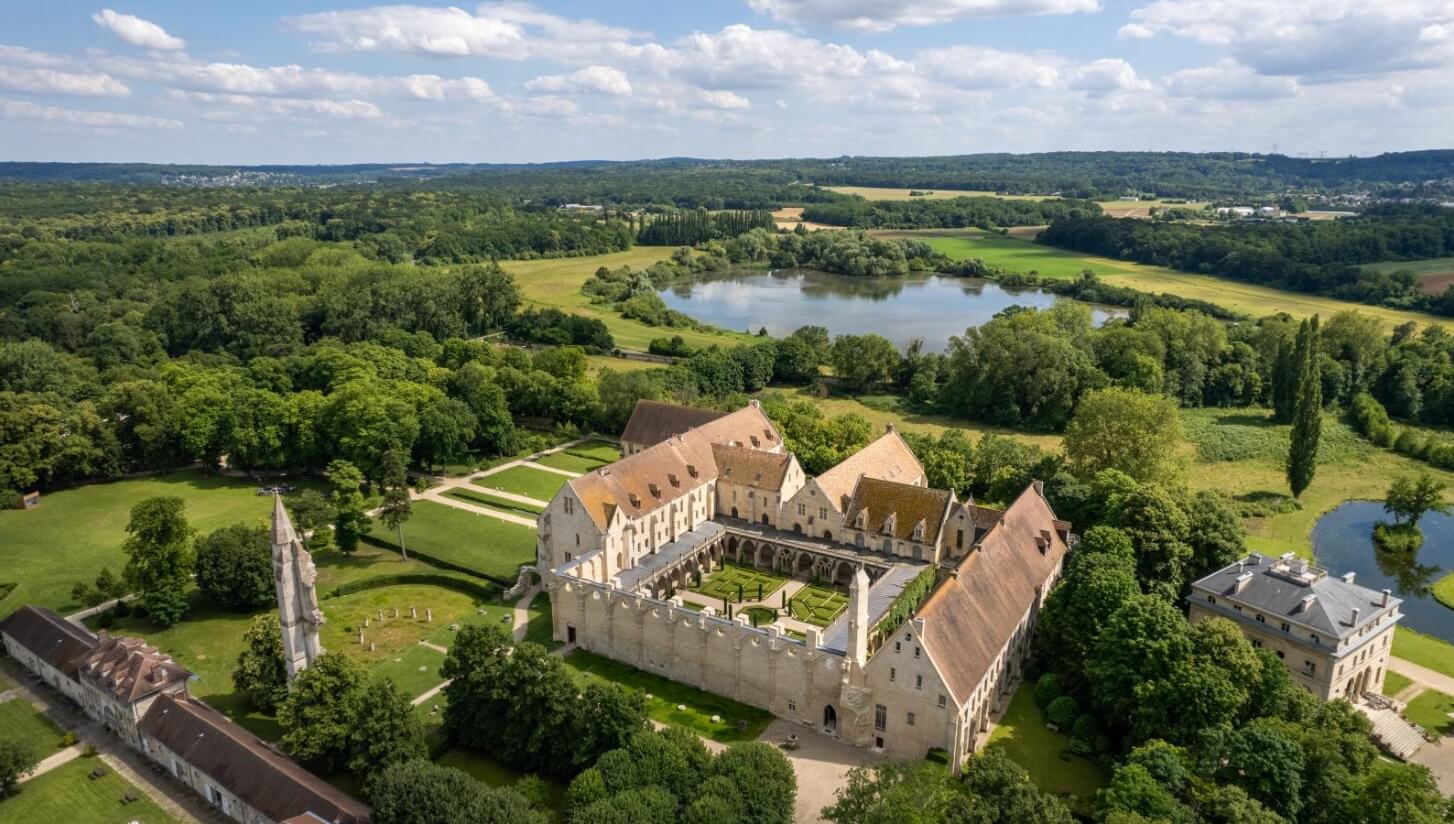
Just outside Paris, Royaumont Abbey is one of those places that immediately impresses you with its scale.
Founded in 1228 by the future King Louis IX (Saint Louis), the abbey was once one of the largest Cistercian monasteries in France. Even today, you can sense how grand it must have been. The cloister alone is remarkable, it is the largest Cistercian cloister in the country.
Walking through the vast monks’ dormitory and the beautiful two-nave refectory (now used as a concert hall) gives you a sense of the life that once unfolded here. At its peak, Royaumont welcomed more than 140 monks.
The abbey church once stretched 105 meters long, almost the size of a cathedral. Only a dramatic fragment remains today, rising unexpectedly beside the monks’ buildings like a giant stone pencil, a striking reminder of the abbey’s former grandeur.
In spring, the surrounding gardens and grounds make it an especially peaceful place to spend an afternoon.
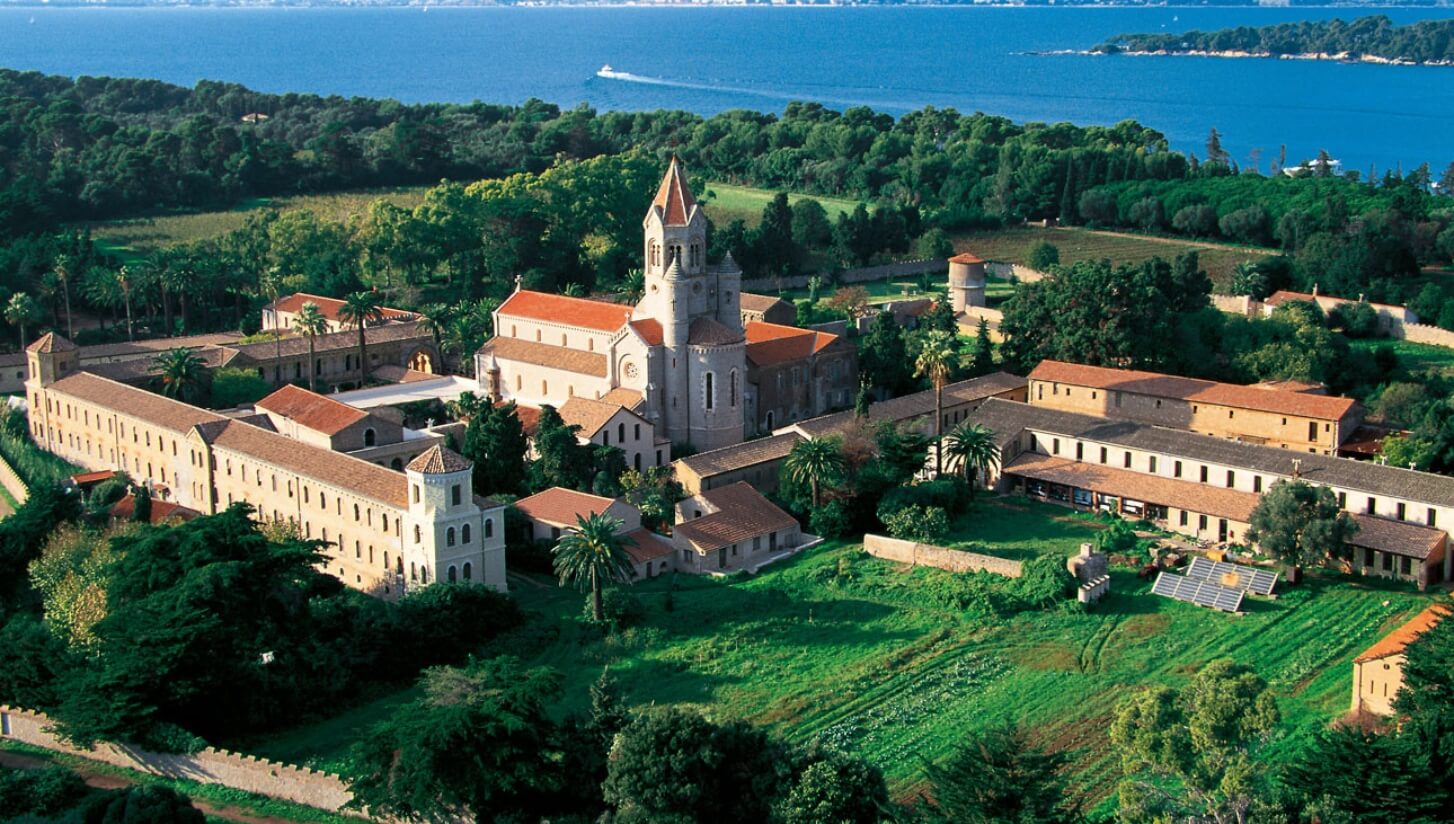
Few abbeys in France have a setting as unique as Lérins Abbey.
It sits on Île Saint-Honorat, one of the small islands just off the coast of Cannes. Boats from Cannes and Antibes bring visitors across the water, but once you arrive, the atmosphere changes completely.
The island is still home to a community of about thirty Cistercian monks, who continue a monastic tradition that has existed here for centuries.
The monks also produce remarkable wines, grown in small vineyards scattered across the island. Their white wines are particularly sought after, thanks to rare grape varieties such as mourvèdre and viognier, cultivated on this exceptional Mediterranean terroir.
Walking the quiet paths between vineyards, pine trees, and stone buildings feels worlds away from the Riviera’s busy coastline.
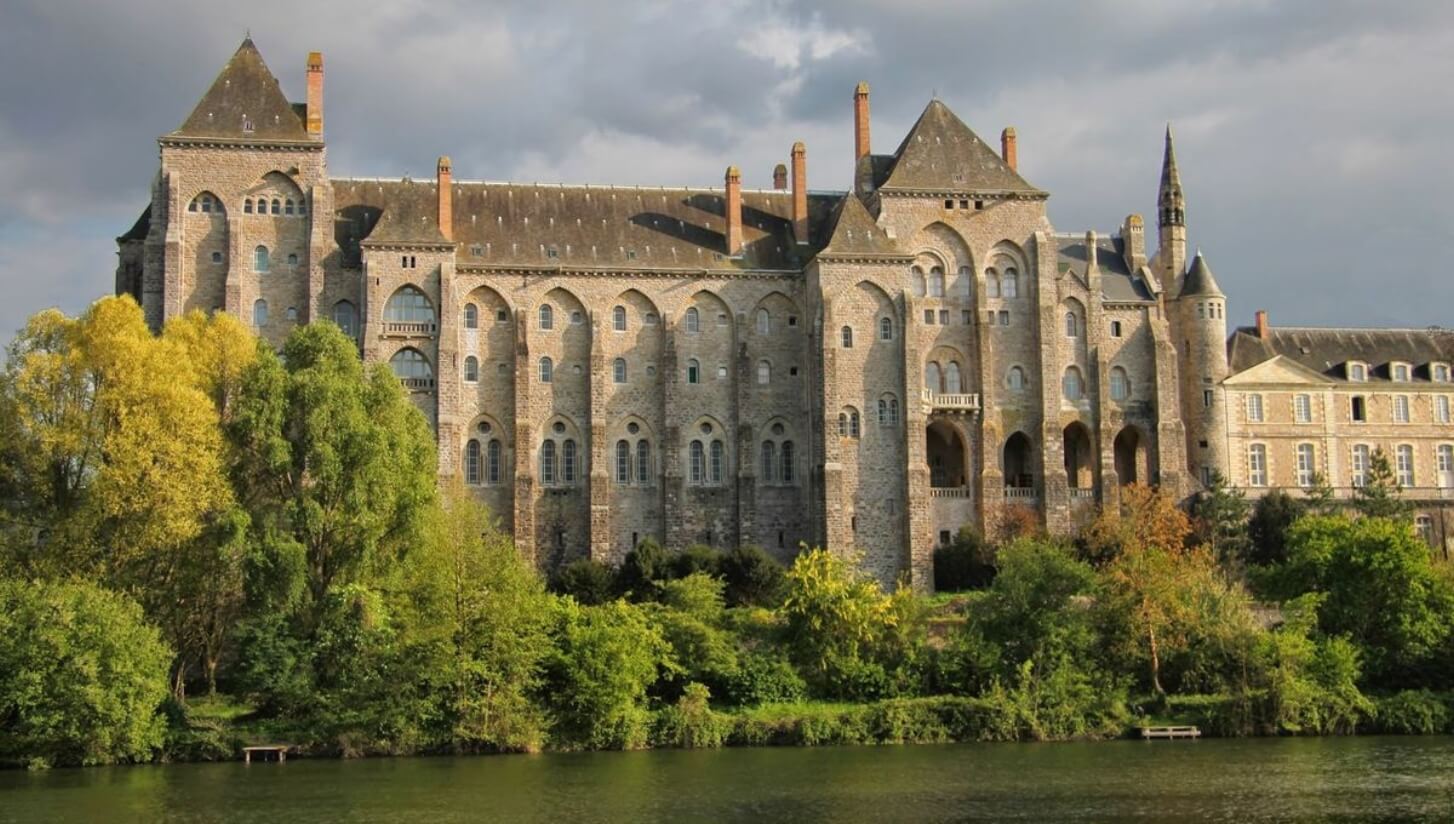
Near the town of Solesmes in the Loire Valley, this abbey is known for something you cannot see but can hear.
For centuries, Solesmes Abbey has been one of the great centers of Gregorian chant. The Benedictine monks who live here continue to maintain and perform this ancient musical tradition.
The abbey sits peacefully beside the Sarthe River, and one of the nicest ways to approach it is on foot or even by boat along the water.
Inside, the atmosphere is calm and deeply spiritual. Outside, visitors can often purchase honey and jams produced by the monks, small reminders of the quiet life that continues within these ancient walls.
Cadouin Abbey
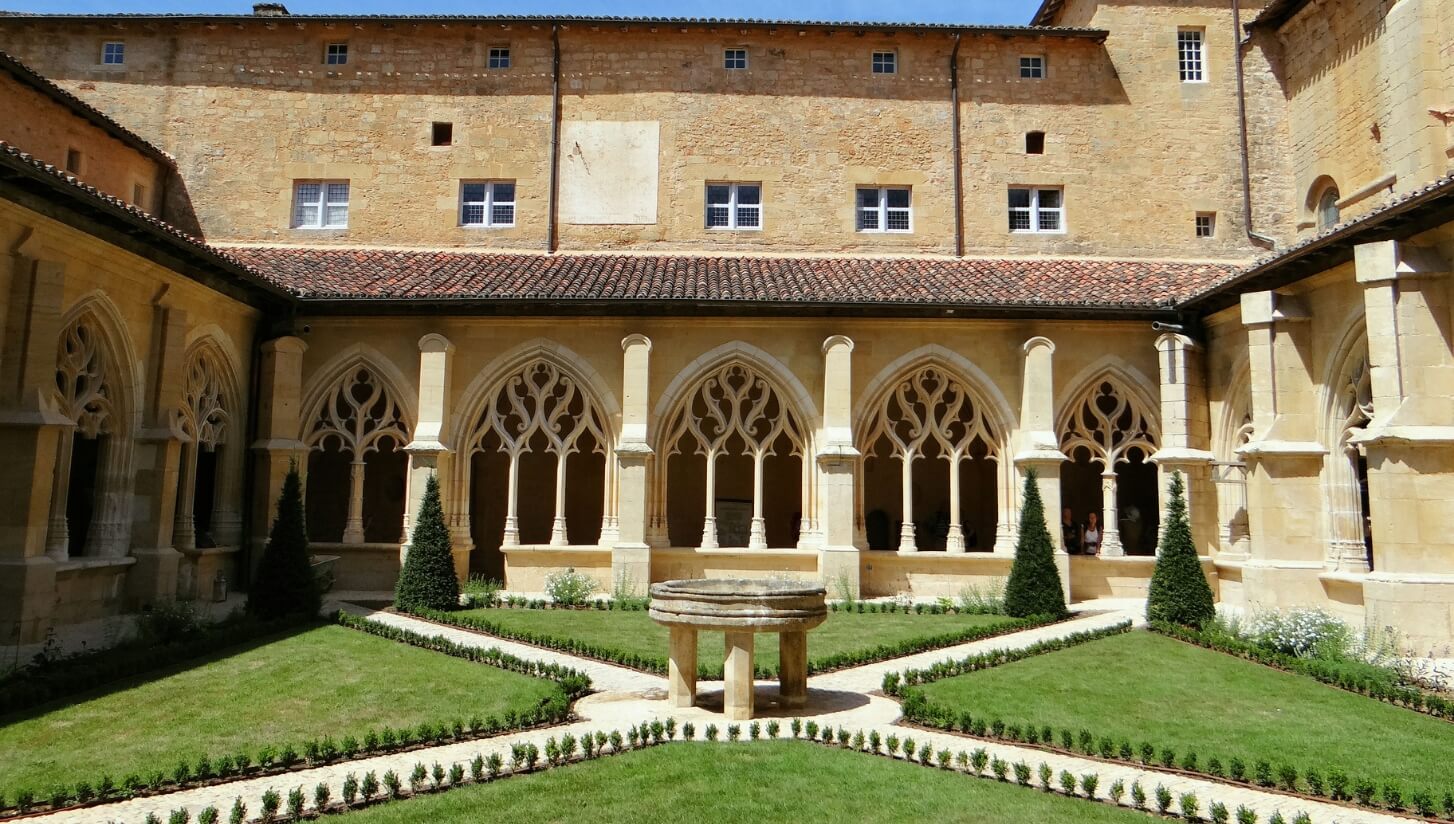
Deep in the forests of the Périgord Pourpre, the Abbey of Cadouin feels almost hidden from the world.
Its cloister, a masterpiece of Flamboyant Gothic architecture, is listed as a UNESCO World Heritage Site. The stone carvings are delicate and intricate, creating a striking contrast with the simplicity of the surrounding countryside.
The abbey has also appeared in several films, but despite this, it remains an incredibly peaceful place to visit.
Surrounded by the quiet Bessède forest, Cadouin is the kind of destination where you might spend more time simply sitting in the cloister than walking through it.
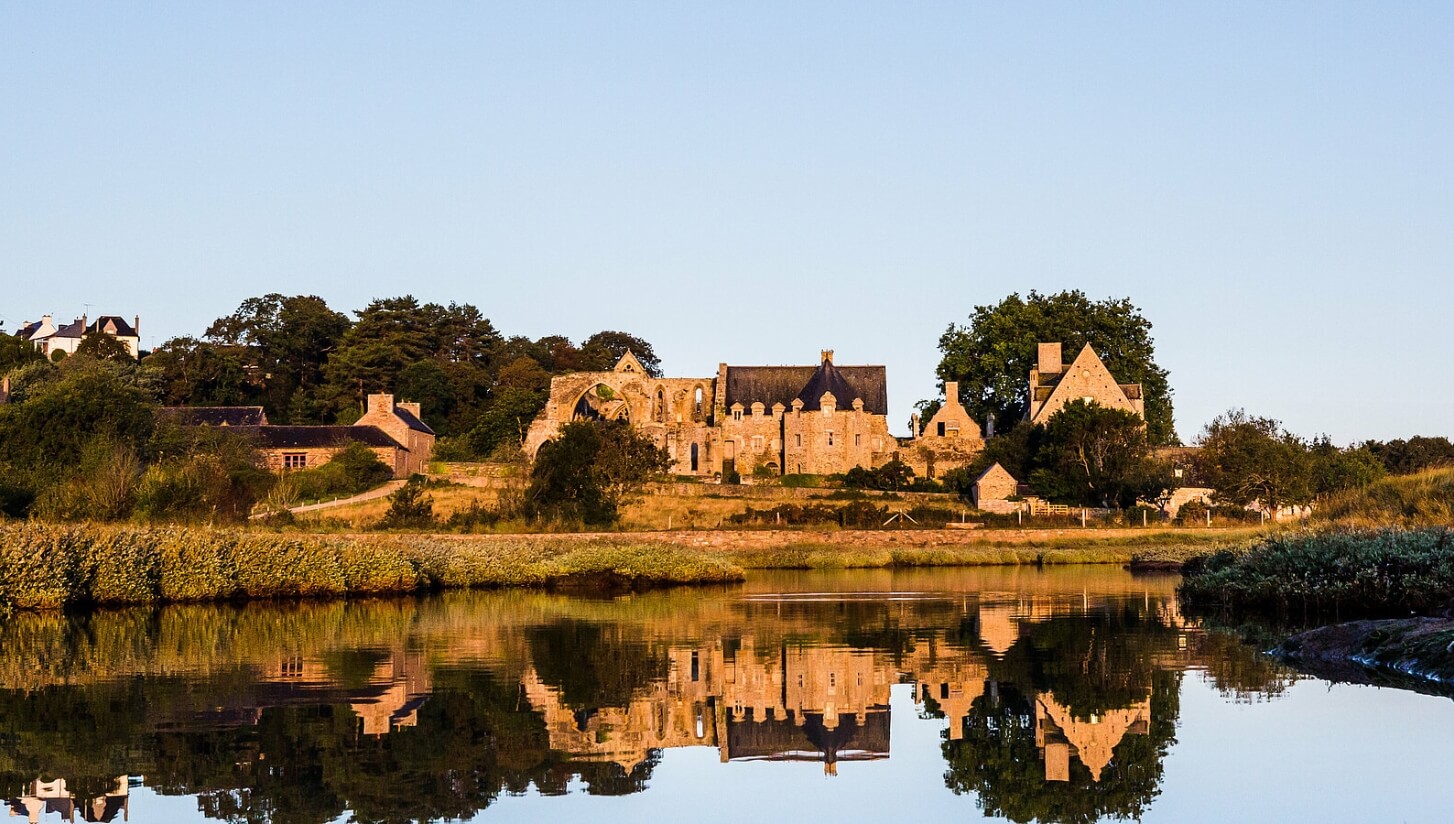
On the coast of Brittany, Beauport Abbey offers something rare: an abbey that meets the sea.
Located near Paimpol, this remarkable monastic complex recently received two stars in the Michelin Green Guide, recognizing both the beauty of the buildings and the richness of the visitor experience.
Founded in the early 13th century by Count Alain de Goëlo, the abbey was home to Premonstratensian canons for nearly five centuries.
Today, visitors can wander through 800 years of history, from the cloisters and church ruins to the enclosed gardens and orchards. The property stretches all the way to the coastline, where reeds sway quietly in the wind.
Every Tuesday
Postcards From France
Get the latest updates on French travel, culture, and more delivered right to your inbox.
Don’t be alarmed, we do not use or store your information. We are a French site and this is simply a regulation for the European Union to let you know that this website uses cookies to improve your user experience. By using our website you consent to all cookies in accordance with our Cookie Policy. Read More